
Juan Gervasoni
Specialist
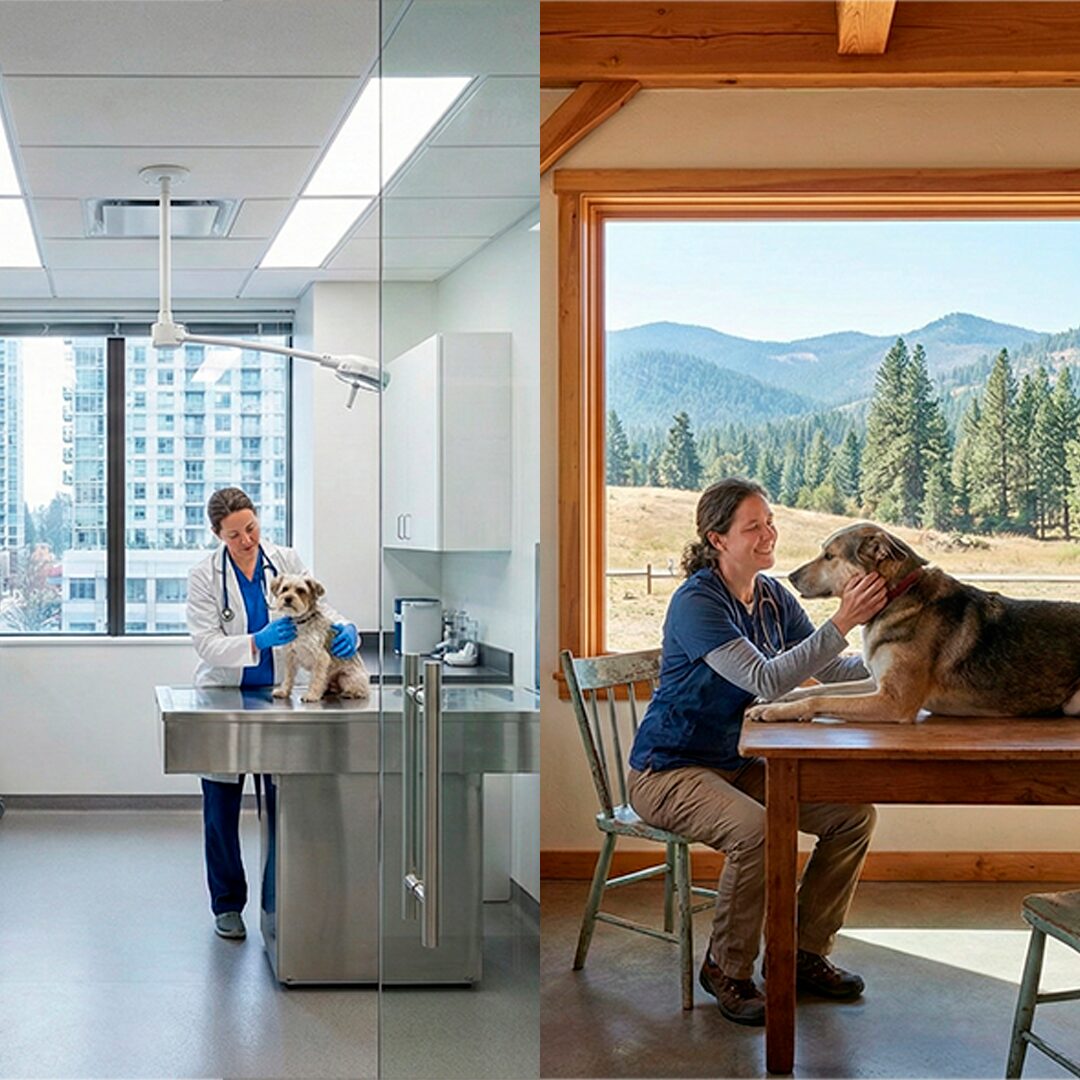
You became a veterinarian to help animals, but nobody said you had to do it from the same clinic for 30 years. If you’re a relief vet (or considering becoming one), here’s a secret the highest earners already know: the highest-paying vet jobs often aren’t in your backyard. They’re in places you’ve never been, doing incredibly rewarding work, with compensation packages that can transform your financial trajectory.
Let’s talk about how travel and location strategy can unlock better veterinary salaries, and why your next high-paying vet job might require booking a flight.
Here’s the reality: veterinary care isn’t distributed evenly across the country. While coastal cities often have multiple practices competing for clients, rural and remote communities face severe veterinary shortages. And when supply is limited, prices go up, way up.
Sometimes the highest paying vet jobs aren’t in the big cities, but in rural communities willing to pay a premium for your expertise. We’re talking about day rates that can be 30-50% higher than urban markets, plus housing, plus travel stipends, plus bonuses for extended stays.
Alaska consistently offers some of the highest compensation in the country. Rural Alaskan clinics, particularly in communities accessible primarily by plane, regularly pay $800-1,200+ per day for relief veterinarians. The catch? Limited infrastructure and extreme weather. The reward? Unmatched adventure, incredible wildlife, and compensation that can help you knock out student loans in record time.
Montana, Wyoming, and the Dakotas represent the “frontier market” for veterinary services. These states have vast geographic areas with sparse populations and even sparser veterinary coverage. Clinics in these regions often offer $600-900 daily rates, and because living costs are significantly lower than coastal markets, your money goes further. Bonus: If you’re into outdoor recreation, you’re getting paid to live near some of America’s most stunning landscapes.
Rural Texas has an interesting dynamic: it’s huge, underserved in many areas, and has a strong livestock component. Mixed animal vets who can handle both small and large animal work are particularly valued here, with some practices offering $700+ daily rates plus housing for extended relief assignments.
The Southwest (New Mexico, Arizona, Nevada) has growing populations in small towns but limited veterinary infrastructure. Native American reservations in particular have chronic veterinary shortages and offer competitive compensation through organizations like the Association of American Indian Veterinarians.
Rural Northeast might surprise you. While you’d think Vermont, Maine, and upstate New York would be saturated, many small communities are losing their only veterinarian to retirement with no one willing to take over. These “legacy” practices often pay premium rates for relief coverage during transitions.
Let’s break down why pursuing the highest paying vet jobs in rural areas works financially for relief veterinarians.
Traditional urban employment: $110,000 annual salary in a high cost-of-living city like Seattle or Boston. After taxes, rent ($2,500/month), and living expenses, you might net $3,500-4,000 monthly toward savings or debt.
Relief vet pursuing high paying vet jobs: Work 15 days per month at $750/day in rural Montana. That’s $11,250 monthly gross, or roughly $135,000 annually. Your housing is provided or stipended. Your living costs during days off (spent in a low-cost home base) are minimal. Suddenly, you’re netting $6,000-7,000+ monthly toward your financial goals.
The difference compounds dramatically over 3-5 years. To understand the full earning potential of the highest paying vet jobs, check out our detailed breakdown of relief vet salary expectations.
Smart relief vets know the day rate is just the starting point when evaluating the highest paying vet jobs. Here’s what else you should negotiate:
Housing stipends or direct provision: Never accept “figure out your own lodging” without significant compensation. Best-case scenario: the clinic provides a furnished apartment, cabin, or house. Second-best: they provide a housing stipend of $75-150/night on top of your day rate. At minimum, they should cover your actual lodging costs up to a reasonable cap.
Travel reimbursement: If you’re flying to a remote location, the clinic should cover your flights or provide a flat travel stipend ($500-1,000 depending on distance). Some practices offer mileage reimbursement for driving assignments at IRS rates.
Per diem for meals: Standard practice in many industries but underutilized in veterinary medicine. Negotiate $50-75 daily for food, especially if you’re in a location with limited dining options and no kitchen access.
Minimum day guarantees: Protect yourself from cancellations. If you’re blocking off your calendar and booking travel, negotiate a minimum payment even if they cancel (typically 50% of agreed days if they cancel within 2 weeks).
Extended stay bonuses: Some clinics offer escalating rates for longer commitments. Your rate might be $700 for a one-week assignment but $800 if you commit to 3-4 weeks. This benefits both parties, they get consistency, you get better compensation and reduced travel logistics.
For more negotiation strategies, read our guide on creating a relief vet-friendly clinic environment to understand what top practices are offering.
Here’s where relief vets think like business owners: every state license is an asset that unlocks new markets and access to the highest paying vet jobs across the country.
Start strategic: Get licensed in your home state plus 2-3 high-demand states with different geographic profiles. For example: your home state (Northeast), plus Montana (rural premium), plus Texas (large market with diverse opportunities). This gives you flexibility while managing costs.
Consider license portability initiatives: The Veterinary Interstate Practice Certificate (VIPC) is still limited but growing. Monitor which states participate through the American Association of Veterinary State Boards, it could reduce your licensing burden.
Track your ROI: If a Montana license costs $500 and enables you to accept three 10-day assignments at an extra $150/day compared to your local market, that’s $4,500 in increased earnings. The license pays for itself on the first trip.
Budget for renewals: Expect to spend $2,000-4,000 annually maintaining 4-5 state licenses, including CE requirements. This is a cost of doing business; factor it into your rate negotiations. Learn more about continuing education strategies for relief vets to maximize the value of your licensing investments.
Pursuing the highest paying vet jobs isn’t just about money, it’s about designing a life that works for you. This is where veterinary work-life balance becomes more than a buzzword, it becomes your reality.
The “snowbird” model: Spend winters in the Southwest earning premium rates, summers in Alaska or Montana doing the same. Never experience a boring spring in the same place twice.
The “home base” model: Establish a low cost-of-living home base (think Boise, Bozeman, Chattanooga) where you have minimal living costs. Work 2-3 week relief assignments in higher-paying locations, then return home for your time off. Your home base expenses are covered by 10-12 days of work monthly.
The “continuous travel” model: Some relief vets eliminate their permanent housing entirely, living out of Airbnbs and extended-stay hotels. If housing is always covered or stipended during work assignments, and you’re strategic about where you spend days off, this can be the ultimate freedom, and the ultimate savings strategy.
Before you book that first plane ticket to a high-paying relief position, make sure you’re prepared for the unique challenges of travel veterinary work.
Walking into a new clinic in an unfamiliar state requires confidence and preparation. Our relief veterinarian first day tips will help you make a strong impression, quickly adapt to new systems, and establish credibility with both staff and clients, even when you’re 2,000 miles from home.
Experienced travel vets know that being prepared makes all the difference. Check out our comprehensive relief vet survival kit guide to ensure you have everything you need, from essential medical tools to personal comfort items that make unfamiliar places feel more like home.
Working in different locations doesn’t mean professional isolation. Building and maintaining strong veterinary networking connections across multiple states can lead to better opportunities, referrals to excellent clinics, and a support system that spans the country.
The highest paying vet jobs aren’t all mountain views and fat paychecks. Here’s what to consider:
Isolation: Working in rural areas can be professionally isolating. You won’t have colleagues to consult in the next exam room. Make sure you’re clinically confident and have strong telemedicine backup resources. Veterinary telemedicine can be a lifeline for complex cases when you’re working solo.
Logistics: Constant travel is exhausting. You’ll live out of a suitcase, navigate unfamiliar airports, and deal with delayed flights when you just want to get home. Effective time management becomes essential.
Relationships: Maintaining friendships and romantic relationships requires intentionality when you’re rarely in the same place twice.
Practice variation: Every clinic has different systems, software, and expectations. The learning curve at each new location can be mentally taxing. Understanding what makes a relief vet-friendly clinic can help you choose assignments that minimize this stress.
Emotional toll: Moving between clinics and saying goodbye to patients and staff you’ve bonded with can contribute to emotional exhaustion. Be proactive about managing compassion fatigue and preventing burnout.
The travel lifestyle can take a toll on your health if you’re not intentional about self-care. Long flights, irregular schedules, and unfamiliar gyms all present challenges. Our guide to relief veterinarian fitness provides practical strategies for maintaining your physical health while constantly on the move.
Don’t forget about continuing education requirements across multiple states—our relief vet continuing education guide helps you stay compliant while maximizing the value of your learning investments.
If you’re intrigued but not sure where to start, here’s your roadmap to landing the highest paying vet jobs.
If you’re new to the concept, start with our comprehensive guide on what is a relief vet. Understanding the full scope of relief veterinary work will help you make informed decisions about whether pursuing high-paying positions in rural areas fits your career goals.
Transitioning to relief vet work is a significant career shift. Whether you’re coming from traditional employment or fresh out of school, understanding the logistics, financial implications, and lifestyle changes will set you up for success.
If you’re in your first year as a veterinarian, our relief vet job first year tips and general vet student tips will help you build confidence before taking on travel assignments.
Stay current with emerging trends in veterinary medicine for 2025 that might affect where the highest-paying opportunities emerge. For instance, the rising demand for Spanish-speaking vets in certain geographic markets could make you even more valuable in regions with large Hispanic populations.
Invest in the right tools for relief veterinarians before your first travel assignment. Having your own reliable equipment reduces stress and helps you provide consistent care regardless of clinic resources.
Working in different communities means adapting your communication style. Brush up on effective communication with pet parents to ensure you can build trust quickly, even as a temporary provider.
If you’re a clinic owner or manager reading this wondering how to attract these high-earning relief vets to your rural practice, we’ve got you covered. Our guides on hiring relief veterinarians, creating a relief vet-friendly clinic, and relief veterinarian workplace tips will show you exactly what top relief vets are looking for—and how to provide it.
Building a positive clinic culture matters even more when you’re trying to attract traveling professionals who have their pick of assignments across the country.
The highest paying vet jobs aren’t always where you think they are. Sometimes they’re in places you’ve never heard of, serving communities that desperately need your skills and are willing to pay handsomely for them.
For the right veterinarian, someone who values autonomy, adventure, and accelerated financial progress over stability and routine—pursuing high-paying veterinary positions in rural areas isn’t just a career strategy. It’s a lifestyle that lets you practice excellent medicine, explore incredible places, and build wealth faster than traditional employment ever could.
The question isn’t whether these opportunities exist. They absolutely do, and they’re growing as rural veterinary shortages intensify. The question is whether you’re ready to exchange your comfort zone for a plane ticket and a bigger paycheck.
For many relief vets, that’s the easiest decision they’ve ever made.
Whether you’re excited about traveling to Alaska for premium day rates or prefer to stay closer to home with local relief work, FlexVet Staffing connects veterinarians with opportunities that match their lifestyle preferences and financial goals.
We understand that not every vet wants to be on a plane every week—and that’s perfectly okay. Our platform offers both travel positions in high-paying rural markets and local relief opportunities in your home state. You choose how much you want to travel, and we’ll match you with clinics that align with your preferences.
FlexVet Staffing specializes in:
Whether you’re ready to embrace the full travel lifestyle or simply want to pick up a few local relief shifts per month, FlexVet Staffing has opportunities that fit your vision of veterinary practice.
Visit FlexVet Staffing today to explore relief opportunities on your terms—with or without the plane ticket.
FlexVet connects licensed DVMs with veterinary clinics across the US. Browse open relief shifts or learn more about how it works.